Dhikala Zone is the largest and most ecologically diverse zone of Jim Corbett National Park, located in the core area of the reserve. It is named after the Dhikala grassland — a vast, picturesque expanse offering breathtaking views of the Ramganga River, dense sal forests, and the Himalayan foothills.
It is considered the heart of Corbett National Park and is world-renowned for its rich wildlife, scenic beauty, and forest rest houses.
Location & geography
- Dhikala Zone is one of the ecotourism / safari-zones of Jim Corbett National Park, situated in the Patli Dun valley region.
- Entry is via the Dhangarhi Gate (sometimes spelled Dhangari) which lies roughly 17-32 km from Ramnagar, depending on route.
- The terrain here is a mix of large grasslands (“chaurs”), river channels (mainly the Ramganga River and its tributaries), and forests (primarily Sal and mixed deciduous).
- Because of this varied terrain, you get wide open spaces (ideal for spotting wildlife) and also forested cover. The grassland + river + forest combination makes it particularly rich wildlife-habitat.
Wildlife & Landscape Highlights
Flora & Landscape
- Large “chaur” grasslands, river-beds and meandering channels of Ramganga, dense Sal forests, mixed forest belts.
- Scenic views: valley views, river banks, watch‐tower viewpoints.
Fauna
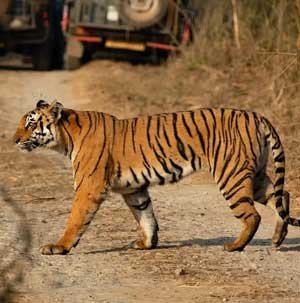
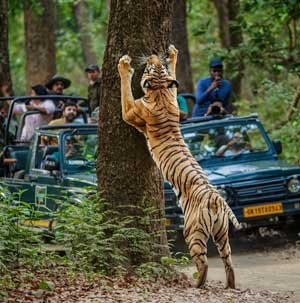
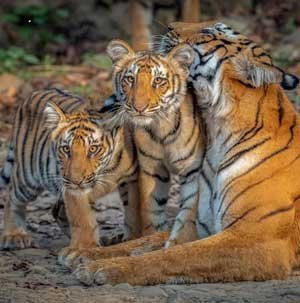
- High probability of spotting the Bengal Tiger. Dhikala is often considered the best zone for tiger sightings.
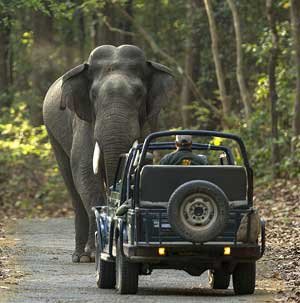
- Also : Asian elephants, spotted deer, sambar deer, hog deer, wild boar, barking deer, otters at river banks, crocodiles/gharial in some water bodies.
- Bird-life : rich in avifauna because of the mix of river, grassland and forest habitats. Species include kingfisher, fly-catchers, etc.
What makes Dhikala special
Topography & Habitat : The zone features large expanses of grassland (“chaurs”), riverine belts of the Ramganga, forested Sal belts and mixed woods—this mix supports diverse wildlife.
Wildlife density & sightings : Because of good water and food resources, many species thrive here: tigers (Bengal tiger), elephants, deer species, wild boar, etc. It’s considered one of the best zones in the park for tiger sightings.
Landscape beauty & setting : The region gives dramatic views of the valley and a wilderness feel—being deep inside forest with river & grassland interface. Many visitors say the ambiance is very “in the wild”.
Overnight option + exclusive zone : Unlike many other zones where you only do day safaris, Dhikala also lets you stay overnight inside the forest rest houses (with limited accommodation) which enhances the “immersive” experience.
Key Visit Details
Here are the practical details you should know if you plan to visit.
Opening season & gates
- The Dhikala Zone is open to tourists from around 15 November to 15 June each year. It is generally closed during the monsoon (mid-June to mid-November) due to weather/road/forest safety.
- Entry gate : The typical access gate is the Dhangarhi Gate (sometimes spelled “Dhangari”) which is located ~17-32 km from Ramnagar (depending on route) and then one enters deeper into the zone.
Safari types & restrictions
Day safari for general tourists : In Dhikala Zone, day access for regular jeep safaris is not permitted in the same way as other zones. For day visits, the fixed format is a canter safari (open-bus sharing) of 16 seats per bus under forest-control.
Jeep safari : Jeep safari inside Dhikala is normally only for those staying overnight in one of the forest rest houses inside the zone — i.e., you must book accommodation and permit to access by jeep.
Capacity and booking : The number of vehicles/visitors permitted is strictly regulated to reduce disturbance. The canter safari seats are limited and booking well in advance is necessary.
Accommodation
- Inside the zone there are Forest Rest Houses (FRHs) and other lodgings: e.g., Dhikala FRH, Gairal FRH, Sarpduli FRH, Sultan FRH.
- Staying overnight gives you the chance of early-morning/late-evening jeep rides and more time in nature. Bookings are to be done in advance (rooms are limited).
Attractions & wildlife-highlights
Grasslands (chaurs) : The open plains provide excellent vantage for spotting animals and for photography: tigers, deer, elephants.
River & crocodiles/gharials : Along the Ramganga riverbeds one can spot aquatic/water-edge species – e.g., crocodiles/gharial, otters.
Watchtower : There is a forest watchtower near Dhikala which gives wide views over the valley/grassland and is a vantage point for wildlife.
Birdlife : Because of the habitat variety (grassland + river + forest), many bird species including water-birds and forest-birds are found here — making it appealing for bird-watchers.
How to plan & tips
Advance booking : Permits, accommodation and safari seats fill up quickly. Booking early is strongly advised.
Be there at dawn or dusk : Wildlife is more active in cooler parts of day, so early morning or later evening safari gives better chances.
Respect regulations : Being a core forest zone, strict rules apply (no alcohol, no loud noises, no stray outside safari vehicle, stay with guide, etc.).
Roads & seasonality : The roads inside the zone, especially in monsoon, may be slippery/impassable. The monsoon closure is real.
Stay comfortable & safe : Bring decent clothing (warm in early morning), binoculars/camera, insect repellent, waterproof gear if needed.