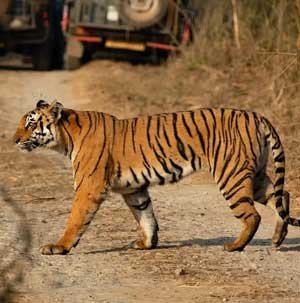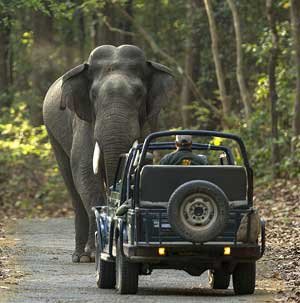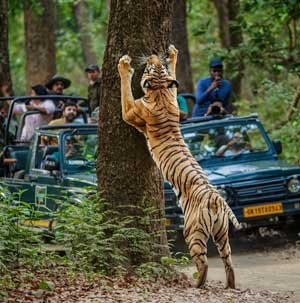
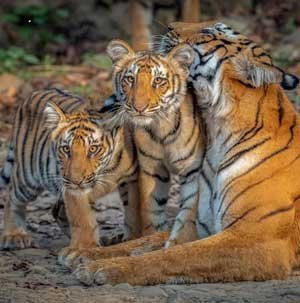
Corbett Tiger Reserve, also known as Jim Corbett National Park, is located in the Nainital and Pauri Garhwal districts of Uttarakhand, India. It is the oldest national park in India and was established in 1936 as Hailey National Park. Later, it was renamed after the famous hunter and conservationist Jim Corbett. The reserve is one of the most popular wildlife destinations in India and plays a key role in tiger conservation.
Overview & Location
- Location : Nainital and Pauri Garhwal districts, Uttarakhand, India
- Established : 1936 as Hailey National Park (India’s first national park)
- Renamed : Jim Corbett National Park in 1957, in honor of the famous hunter-turned-conservationist Edward James Corbett
- Area : Approximately 1,318.54 sq km (core area: 520 sq km; buffer area: 798.54 sq km)
- Coordinates : Between 29°25′ to 29°39′ N latitude and 78°44′ to 79°07′ E longitude
- Governing Body : Uttarakhand Forest Department
History
Corbett Tiger Reserve is the oldest national park in India and a pioneering site for wildlife conservation.
- It was established in 1936 as Hailey National Park by the initiative of Sir Malcolm Hailey and Jim Corbett.
- It became the first reserve to come under Project Tiger in 1973 — India’s flagship tiger conservation program launched by the Government of India.
- Over the decades, the park has evolved into a model for scientific conservation, eco-tourism, and wildlife management.
Geography and Topography
- The park lies at the foothills of the Himalayas, where the Siwalik Hills meet the Terai region.
- The terrain is diverse — comprising sal forests, grasslands (chaurs), riverine belts, marshes, and hilly ridges.
- Altitude: 385 to 1,100 meters above sea level.
- Major Rivers: Ramganga, Sonanadi, Mandal, Kosi, and Palain.
Climate
- Winter (November–February): 5°C to 25°C — cool and pleasant
- Summer (March–June): 20°C to 40°C — warm and dry
- Monsoon (July–September): Heavy rainfall; some zones are closed to visitors
- The best visiting period is from November to mid-June.
Flora
Corbett’s vegetation is rich and varied due to its altitudinal range and rainfall pattern.
- Dominant trees: Sal (Shorea robusta), Khair (Acacia catechu), Sheesham (Dalbergia sissoo)
- Other species: Haldu, Rohini, Mango, Peepal, Ber, and Bamboo
- Grasslands: Provide essential grazing grounds for herbivores
- The forest type is classified mainly as moist deciduous and sub-Himalayan belt
Fauna
Mammals
- Tigers (Panthera tigris tigris) — the flagship species
- Leopards, Elephants, Sloth bears, Wild boars, Deer species (spotted deer, sambar, barking deer, hog deer), Langurs, Rhesus macaques, Otters, and Yellow-throated martens
Birds
- Over 600 bird species (resident + migratory)
- Examples : Crested serpent eagle, Himalayan vulture, Kingfisher, Barbet, Fish owl, Peafowl
Reptiles
- Marsh crocodile, Gharial, King cobra, Python, Monitor lizard
Fish and Amphibians
- Rich aquatic biodiversity, especially in the Ramganga River
Zones of the Park
Corbett is divided into several ecotourism zones, each with unique landscapes and wildlife experiences :
Dhikala Zone : Entry - Dhangarhi Gate
Bijrani Zone : Entry - Amdanda Gate
Jhirna Zone : Entry - Dhela Gate
Dhela Zone : Entry - Dhela Gate
Durga Devi Zone : Entry - Durga Devi Gate
Sitabani (Buffer) : Entry - Sitabani Gate
Tourism Activities
- Jeep safaris and canter safaris
- Elephant rides (limited, mostly for patrolling)
- Birdwatching tours
- Nature walks (in buffer zones)
- Wildlife photography and ecotourism programs
Accessibility
Nearest town : Ramnagar (approx. 15 km from the park)
Nearest railway station : Ramnagar Railway Station
Nearest airport : Pantnagar Airport (approx. 80 km); Dehradun and Delhi are also accessible by road.
Distance from Delhi : About 250 km (6–7 hours by road)