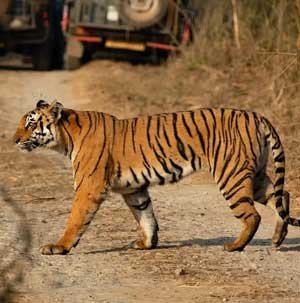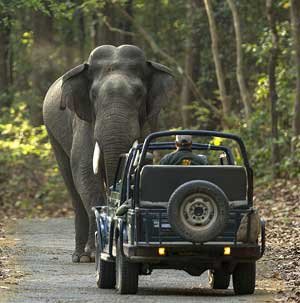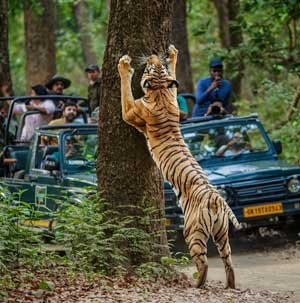
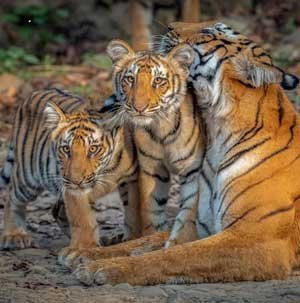
Jim Corbett National Park in Uttarakhand offers jeep (and canter) safaris through different zones. The safaris let you explore forested terrain, grasslands, riversides, in search of wildlife including tigers, elephants, deer, birds etc.
What is Jim Corbett Jeep Safari
- A Jeep Safari in Jim Corbett National Park is a way for tourists to explore the forest and see wildlife (like Bengal tigers, elephants, deer, sloth bears, birds etc.) in their natural habitat by riding in a jeep (4×4) with a driver and a naturalist/guide.
- There are also Canter Safaris in some zones (e.g. Dhikala) which use larger open-trucks, accommodating more people.
- Designed for wildlife spotting : tigers, elephants, deer, birds, etc., through various ecological zones.
Why it’s special / Highlights
- The park is India’s oldest national park (established in 1936 as Hailey National Park) and has rich biodiversity and scenic landscapes (hills, river, forests)— so the safari offers not just wildlife, but an immersive nature experience.
- A Jeep Safari gives access to many interior tracks compared with some other safari modes (like large canters) — more flexibility, more intimate.
- You get the chance to spot prime wildlife — the Bengal tiger, elephants, sloth bears, deer, birds and more in their natural habitat. Many zones are known for frequent sightings.
- It’s an adventure + nature combo = early morning drive, forest sounds, possibility of mist, dramatic lighting, vivid wildlife.
- For wildlife photography enthusiasts, a jeep safari gives a good vantage (open sides, less obstructed views) and often gives you access to quieter areas.
- Being in the foothills of Himalayas / Terai region, the terrain changes, you’ll see grasslands, river banks (Ramganga), dense forests and panoramic views — adding to the experience.
Safari Zones
There are several tourism zones within the park or Reserve where jeep safari is allowed. Each zone offers slightly different landscape, terrain and wildlife‑viewing opportunities. Some of the commonly mentioned ones :
Bijrani Zone : The Bijrani Zone in Jim Corbett National Park is known for its lush sal forests, open grasslands, and high chances of tiger sightings, making it a favorite among wildlife enthusiasts. Jeep safaris here offer a thrilling experience with rich biodiversity, especially during the early morning hours.
Jhirna Zone : The Jhirna Zone offers jeep safaris through dry deciduous forests and open grasslands, providing good opportunities to spot herbivores, sloth bears, and occasionally tigers. It's one of the few zones open year-round, making it ideal for off-season wildlife exploration.
Dhela Zone : The Dhela Zone, part of the buffer area of Jim Corbett, offers jeep safaris through mixed forests and grasslands, rich in birdlife and wildlife like elephants and leopards. It's less crowded and ideal for a peaceful, nature-focused safari experience..
Durgadevi Zone : The Durgadevi Zone offers adventurous jeep safaris through hilly terrain and riverine forests, known for birdwatching and sightings of leopards and elephants.
Sitabani Zone (Buffer area) : Sitabani Zone, a tranquil buffer area, offers jeep safaris through dense forests and grasslands, perfect for spotting diverse wildlife and bird species in a peaceful setting.
Timings & Duration
- Morning session : roughly around 5:30 AM to 9:30 AM (summer) or slightly later in winter.
- Evening session : roughly around 2:00/3:00 PM to 6:00/7:00 PM depending on season.
- Duration : Usually around 3 to 4 hours for a typical jeep safari.
Pricing & Booking
Pricing
- For Indian nationals : around ₹ 7,000+ per jeep (with up to 6 people) in many zones.
- For foreign nationals : higher (₹ 13,000+ per jeep in some info).
- Note : The exact tariff depends on zone, season, official vs private booking etc.
Booking
- Advance booking is highly recommended because permits are limited.
- You’ll need to submit identity details (for Indians : Aadhar/PAN/Driving license; for foreigners: passport) along with booking.
- Permits are non‑transferable and once booked may be non‑refundable in many cases.
- You cannot simply drive your own car in these zones; must use registered safari jeep.
Best Time to Visit
- The typical open period for many zones is from around mid‑November to June end. During monsoon (July‑mid‑Nov) many zones close for safety and conservation.
- Early morning safari (sunrise) often gives better chances for wildlife activity (and cooler, more comfortable).
- Dry season (late winter => early summer) can be good as animals move to water sources, making viewing easier.