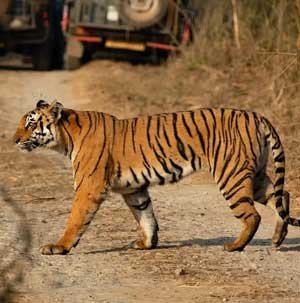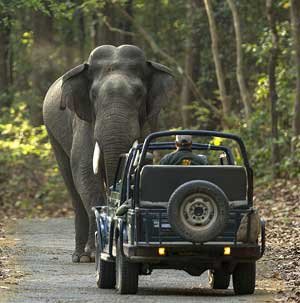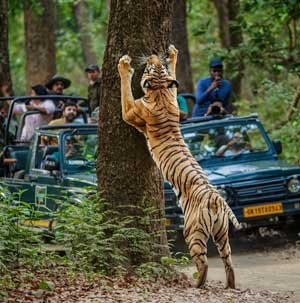
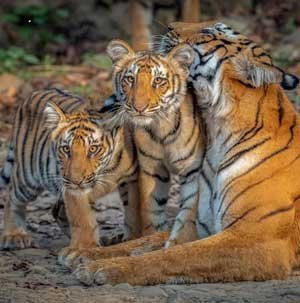
Jim Corbett National Park, located in Uttarakhand, India, is one of the most famous and oldest national parks in the country. It is divided into multiple zones, each with its own entry gate that leads to specific regions of the park. Each gate offers a unique landscape, wildlife viewing experience, and accommodation options.
Dhangarhi Gate (Dhikala Zone)
Dhikala is the most popular and largest tourism zone of Corbett. The entry to Dhikala is through the Dhangarhi Gate. It offers the best chance of spotting tigers, elephants, deer, gharials, and diverse birdlife. The Dhikala zone provides canter and jeep safaris and allows night stays at forest rest houses like Dhikala, Gairal, Sultan, and Sarpduli.
Key Features
- Most scenic landscapes and rich wildlife.
- Night stay allowed only with prior booking.
- Famous for Ramganga River and grasslands.
- Limited access – only for those with valid permits.
Amdanda Gate (Bijrani Zone)
The Bijrani zone is known for its dense sal forests, open grasslands, and frequent tiger sightings. Entry is through the Amdanda Gate. It offers both morning and afternoon jeep safaris. It’s easily accessible and among the most visited zones after Dhikala.
Key Features
- High probability of tiger sightings.
- Thick sal forests, open grasslands, and water streams.
- Elephant, deer, leopard, and various bird species are commonly seen.
- Jeep safaris only (no canter).
- Day visit only – no night stays inside this zone.
Jhirna Gate (Jhirna Zone)
The Jhirna zone remains open throughout the year, unlike some zones that close during monsoon. It’s known for dense forest areas and grasslands where sloth bears, leopards, and elephants are often spotted.
Key Features
- Home to sloth bears, wild elephants, and leopards.
- Frequent sightings of deer, langurs, and peacocks.
- Good zone for birdwatching.
- Morning and evening jeep safaris available daily.
- Easy access from Ramnagar and Dhela zones.
Dhela Gate (Dhela Zone)
Dhela zone was added in 2014, making it the newest ecotourism zone. It shares a boundary with the Jhirna zone and offers rich biodiversity with sal, rohini, and haldu trees. It’s less crowded and offers a peaceful safari experience.
Key Features
- Rich in biodiversity and less crowded.
- Ideal for those seeking peaceful safari experiences.
- Good sightings of elephants, leopards, deer, and a variety of birds.
- Suitable for jeep safaris in both morning and evening shifts.
Durgadevi Gate (Durgadevi Zone)
The Durgadevi zone is located on the hilly slopes and riverine belts of the Ramganga and Mandal rivers. It’s famous for angling (Mahseer fish) and scenic drives through hilly terrain. It’s ideal for birdwatchers, as many Himalayan species are spotted here.
Key Features
- Entry point for anglers (Mahseer fishing in Ramganga & Mandal Rivers).
- Known for leopards, elephants, and otters.
- Excellent for bird lovers – home to many Himalayan species.
- Hilly terrain with panoramic forest views.
- Less commercialized, ideal for offbeat travelers.
Garjia Gate (for Garjia Zone)
The Garjia zone is relatively new and offers a balanced mix of dense forest and open meadows. It’s emerging as a popular option for tourists due to its easy access and good tiger sighting records.
- Easy access for visitors staying near Ramnagar.
- Offers good chances of spotting tigers and elephants.
- Scenic landscape with grasslands and riverine areas.
- Perfect for short safaris and photography.
- Gaining popularity among tourists.
Sitabani Buffer Zone (Sitabani Gate)
The Sitabani Buffer Zone lies on the eastern periphery of Corbett National Park. Unlike the core zones such as Dhikala or Bijrani, Sitabani is not part of the main Corbett Tiger Reserve’s core area — it’s managed as a buffer forest area under the Forest Department rather than the Corbett Tiger Reserve authorities.
It is famous for its mythological connection with the Ramayana, diverse flora and fauna, and its tranquil environment that offers a different experience from the core safari zones.