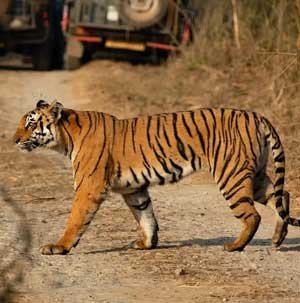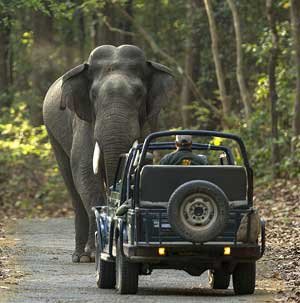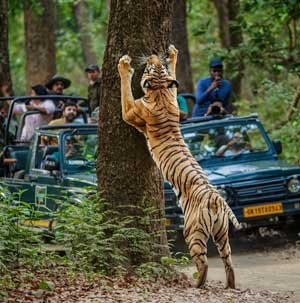
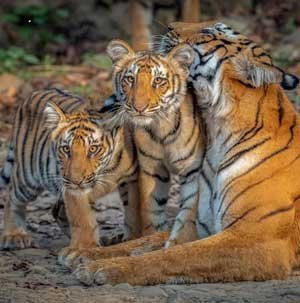
The Sonanadi Safari Zone, part of the Jim Corbett National Park in Uttarakhand, is a serene wildlife area named after the Sonanadi River, meaning “river of gold.” Spread over 301 sq km, it features dense Sal and bamboo forests, riverine belts, and grassy clearings. The zone is home to rich wildlife including tigers, elephants, leopards, deer, and over 550 bird species, making it a paradise for nature lovers. Visitors can enjoy jeep and elephant safaris through scenic forest trails, streams, and hilly terrain. Compared to the busier Corbett zones, Sonanadi offers a quieter, more natural jungle experience. It remains open to tourists from October to June, offering ideal conditions for wildlife viewing and photography.
Location & General Info
- Sonanadi Wildlife Sanctuary covers about 301.18 km² in the Shiwalik (Terai) biotic province of Uttarakhand, India.
- The name “Sonanadi” literally means “river of gold” — in earlier times gold-panning was done in the river before the area became a protected forest.
- It was formerly part of the Kalagarh Forest Division, and in 1991 became part of the larger Corbett Tiger Reserve under “Project Tiger” (and also affiliated with Project Elephant).
- There are no villages inside the sanctuary (which is positive from a conservation & wilderness perspective).
Flora & Habitat
- The habitat is typical of northern India’s moist-deciduous and Terai forests: dense stands of Sal (Shorea robusta), bamboo clusters, Sheesham, Semal, Bakli, Jamun, Aonla, Kanthber, figs, and medicinal plants/shrubs (some endangered) are all found.
- The terrain also includes grasslands (“chaurs”) and water-bodies, which attract animals and birds. For example, one area called Laldhang chaurs is noted for elephants and deer.
- The forest type, in the Shiwalik zone, gives good cover, mixed with open patches and waterways—so good for both big-game and birdlife.
Fauna
Mammals : Key species include the Asiatic Elephant, the Bengal Tiger (Panther tigris tigris), Leopard, Sambhar, Cheetal (Spotted Deer), Barking Deer, Wild Boar, Goral, Otter, Porcupine, Yellow-Throated Marten, Sloth Bear.
Birds : Over 500 bird species (some sources say about 550) including resident + migratory birds. Species include Hornbills, Warblers, Flycatchers, Changeable Hawk Eagle, Emerald Dove, Himalayan Bearded Vulture, Brown Fish Owl, etc.
Reptiles & Aquatic Life : Includes monitor lizards, python, king cobra, mugger crocodile, gharial, Mahseer fish, Indian trout.
Safari & Visiting Details
Open/Closed Period : Typically open from 15 October to 15 or 30 June (different sources give slight variations) and closed during the monsoon period (mid-June to October) because of rain, accessibility and conservation concerns.
Safari Types : Jeep safaris and elephant safaris are available. Walking trails are also allowed in specific areas (with guard).
Timings Example
- Summer : Morning ~06:00-09:30, Evening ~15:00-18:30
- Winter : Morning ~07:00-10:30, Evening ~14:00-17:30
Entry Gates : Some key gates for Sonanadi include Vatanvasa Gate (for Sonanadi), Pakhro Gate, Kolhu etc.
Accommodation : Several Forest Rest Houses (FRHs) inside or around the zone — e.g., Halduparao, Lohachaur, Rathuadhab, Mundiyapani — for stay amidst wilderness.
Booking : Advance booking is required for safari and lodging (depending on zone). Tickets/permits often via the Ramnagar office of the Park authorities.
How to Reach
- Nearest major base is Ramnagar (in Nainital district) which serves as gateway to Jim Corbett & Sonanadi.
- Road connectivity is good; from Kotdwara/Dugadda one can approach Vatanvasa or Pakhro gates.
- It’s advisable to check local condition (road, weather) especially since monsoon closures affect access.
Ideal Time to Visit & Tips
What to pack : Good binoculars (for birding & wildlife), sturdy / comfortable shoes (if walking trails), light warm clothing for mornings/early evenings, sun-protection for midday.
Wildlife etiquette : Safaris should stay on designated tracks; maintain distance from wildlife (especially large mammals like elephants/tigers); follow guide/forest guard instructions.
Photography : The mix of dense forest + water bodies offers good chances for varied shots (elephants by streams, deer in grasslands, birds).
Accommodation : Staying inside FRH offers a deeper wilderness feel but book well in advance; if staying outside, plan early entry for safari pick-up.
Check conditions : If visiting soon after monsoon or in early season, check if the zone & gate are open (forest roads may be affected).
Best Time to Visit & Tips
Best months : November to April (cooler, good for wildlife sightings, rivers are accessible, forests dry enough). Monsoon (mid-June to mid-October) usually closed for safaris in this zone.
Wildlife sightings : Early morning or late afternoon safaris are best—wild animals are more active near water bodies during these times.
What to carry : Good binoculars, camera with zoom, trekking shoes, light jacket (early morning can be chilly), insect repellent, sun-hat, water bottle.
Stay & book early : Since the zone is less commercial compared to some other zones, book forest rest houses or safari permits in advance.
Respect rules : Stay inside vehicle unless permitted, maintain quiet, don’t feed any animals, follow guide/guard instructions.
Why fewer crowds : Because it is slightly less known (compared to some other zones of Corbett) and because of seasonal closure, you may find a more peaceful, less crowded experience here.