Jim Corbett National Park covers over 520 square kilometers of diverse landscapes — from dense Sal forests and riverine belts to grasslands and foothills of the Himalayas. It’s part of the larger Corbett Tiger Reserve, which includes both core and buffer zones.
Exploring the park is strictly regulated to protect wildlife and habitat, and all travel inside is allowed only through authorized safaris and forest lodges.
Entry and Zones
The park is divided into seven main zones (Dhikala, Bijrani, Jhirna, Dhela, Durgadevi, Garjiya, and Sitabani).Each zone has a separate entry gate (as covered in your earlier question) and specific rules and timings.
Safari Types
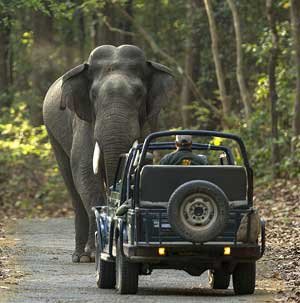
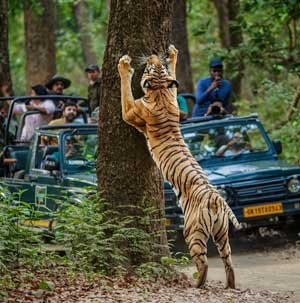
Jeep Safari
- 6-seater open jeep
- Duration: 3 to 4 hours (morning/evening)
- Best for wildlife photography and close exploration
- Must be booked in advance (online or through hotel/tour operators)
Canter Safari
- 16–18-seater open bus.
- Operates mainly in Dhikala Zone.
- Ideal for group travelers.
- Morning and evening trips available.
Elephant Safari (Limited and zone-specific)
- Available only in Bijrani and Corbett Landscape (outside park area).
- Offers a slower, quieter way to explore the jungle.
- Subject to seasonal and forest department availability.
Trekking (Special Permits)
- Certain designated trails allow guided trekking.
- Best for birdwatchers and nature enthusiasts.
- Not all areas are accessible on foot due to safety concerns.
What You’ll See Inside
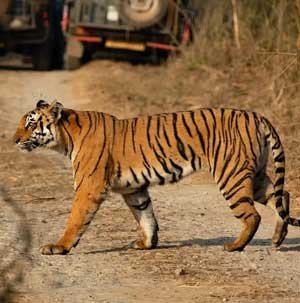
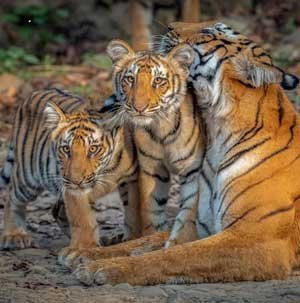
Wildlife : Tigers, leopards, elephants, wild boars, sambar deer, barking deer, sloth bears, jackals, and numerous reptiles.
Birdlife : Over 600 species including crested serpent eagles, kingfishers, and migratory birds.
Flora : Sal forests, grasslands, riverine vegetation, and diverse Himalayan flora.
Rivers & Waterholes : The Ramganga River flows through the park, attracting wildlife to its banks.
Rules and Guidelines
- Stay inside the vehicle at all times.
- Do not feed or disturb animals.
- Avoid loud noises or flash photography.
- Maintain cleanliness; carry your trash out
- Follow your guide’s instructions strictly for safety.
Tips for Traveling Inside
- Advance Booking : Safaris must be booked online or through authorized tour operators.
- Guided Tours : Never wander off without a forest guide.
- Photography : Carry telephoto lenses for wildlife shots; keep noise minimal.
- Clothing : Neutral colors; avoid bright colors that disturb wildlife.
- Safety : Do not feed or disturb animals; maintain distance at all times.
- Timing : Morning and evening safaris are best; mid-day sightings are rare due to heat.
Accommodation Inside the Park
- Forest Rest Houses (FRHs)
- Located in Dhikala, Bijrani, Jhirna, Durga Devi, etc.
- Basic but comfortable, often with meals provided.
- Book via Corbett Online Portal.
Best Time to Visit
October to June - Ideal months as the park is closed during the monsoon (July–September) due to heavy rainfall.
Winter (Nov–Feb) – Cold but offers clear skies and higher chances of spotting wildlife near water sources.
Summer (Mar–Jun) – Dry season, wildlife sightings are easier as animals gather near water.